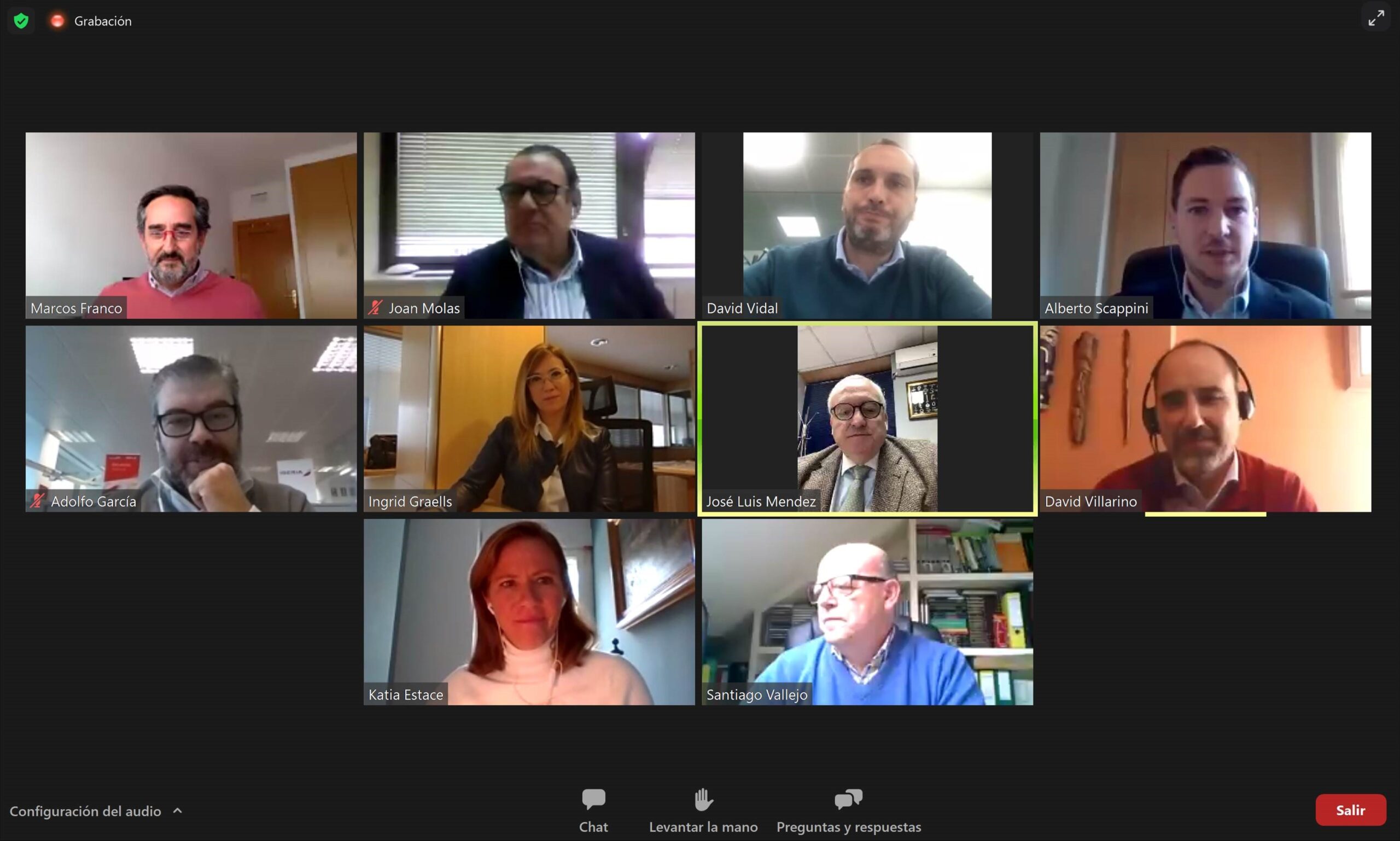
The National Observatory on Outbound Tourism (ObservaTUR) held a new digital forum today titled“The Future of Outbound Tourism: Rebuilding,”during which participants analyzed the most important factors to consider moving forward and revealed some of the changes expected to occur in this tourism segment in the post-COVID-19 era.
The first speaker in the online discussion was Joan Molas, president of the Tourism Board, who shared his vision of what the recovery of the tourism and travel sector might look like on “D-Day”—a date he set for the first quarter of 2021, “in late March or early April.”
To that end, the first thing we must do—Molas said—is what he has called an “internal outreach effort,” that is, to convince all industry stakeholders that with the right measures (whether through a potential vaccine or testing), we can restore confidence and achieve the desired recovery, because there is a “desire” to travel, he emphasized—a point on which all participants agreed.
The president of the Tourism Board also highlighted the key factors that, in his view, will shape the post-COVID-19 future: “complete” digitalization, talent, and personalization. He also noted that, following the crisis, the customer will be even more important than they have been up to now. A customer who—he noted—will be much more digitally savvy, will seek “brand prestige in every aspect of travel,” and will demand higher-quality service.
In this “radical” transformation that Molas foresees, travelers will seek flexibility and make their reservations later than they have in the past, prioritizing safety and guarantees. And, above all, they will be more informed than ever about every aspect of travel, from the terms and conditions to transportation companies and accommodations. “The new customer will be much more knowledgeable,” he said. Hence the importance he attaches to travel agencies and tour operators for the future, as from now on they will hold an even more prominent position, if that is possible.
All in all, despite having set a date for reopening on the calendar, Joan Molas has stressed the need to “buy time” until then and to maintain a series of measures he has outlined, including, for example, securing financing channels, implementing tax cuts (especially VAT), protecting jobs through the ERTE model (until June 30), and reducing airport fees. He also spoke of the urgency of improving the government’s communication policy in international markets, which he described as “terrible.”
Representing the sponsoring companies of ObservaTUR were David Vidal (Amadeus), Katia Estace ( AON), Ingrid Graells ( Beroni), David Villarino ( Viajes Carrefour), Adolfo García Serrano ( Iberia), Santiago Vallejo (Movelia), José Luis Méndez ( UNAV), and Alberto Scappini (Renfe SNCF).
According to the sales director of Amadeus in Spain, David Vidal, the future of travel, now more than ever, depends on technology and innovation, with new developments that allow for adaptation to the times ahead. Among the future trends he foresees, he has cited, for example, the need to maintain physical distancing in common transit areas for a period of time, automated checks, and biometric identity checks.
Katia Estace, executive director of AONhas emphasized that travelers’ desire to travel remains undiminished, but they want to do so, she said, “with guarantees,” hence the importance of developing products—including travel insurance—that provide those guarantees at every stage of the trip.
The sales director of Beroni, Ingrid Graells, for her part, also highlighted the importance of digitalization and personalization in the new era. “We have made significant progress in these areas, but we must continue to advance to provide new competitive advantages to travel agencies, which will become even more prominent in the post-COVID-19 era. And to that end, they have technology that supports them more than ever before.”
David Villarino, CEO of Viajes Carrefour, has said that it is not enough for customers simply to want to travel again; rather, all companies—including travel agencies, of course—"must be prepared and more agile" to respond to those desires; desires that, he adds, must first and foremost involve feeling "at ease" and "safe." There are also changes, he noted, that will remain in place for at least some time, such as the issue of flexibility, even pushing price into the background. Regarding sustainability, Villarino states that it is not yet a “decision-making criterion,” although, all else being equal, “it is valued more highly.”
Adolfo García Serrano, senior manager at Iberia for agencies, has highlighted three key elements for the future to lay the groundwork for the new tourism on the horizon: trust, communication, and customers, because as soon as restrictions are lifted, he noted, “travelers respond.” Hence the urgency to minimize lingering uncertainties and standardize information. He even argued that, in many cases, companies will have to “re-learn” after the pandemic to respond to the demands of the new market that emerges.
The CEO of Movelia, Santiago Vallejo, also emphasized the need to improve information and coordination among countries (and the autonomous communities themselves) moving forward because, he said, people are currently “confused.” “Without standardizing the restrictions, it will be impossible to reliably accommodate travelers,” he stated. He also called for information to be “consistent” so that people who are traveling (or plan to travel) know “what to expect.”
José Luis Méndez, president of the National Union of Travel Agencies (UNAV), has stated that travel agencies are ready “for the starting gun,” though he has not been as optimistic about the exact date of the reopening, given all the planning and logistics involved and the damage the pandemic has inflicted (and continues to inflict) on the sector as a whole. He did, however, emphasize the catalytic role that safe travel corridors can play and the significant role that travel agency professionals may have in the future, since “customers will not only need to book a trip, but they will also require much more information about destinations.” Finally, Méndez thanked agents for their ongoing work and highlighted the importance of professional associations during these particularly difficult times. Regarding travel, he said that a return to “normalcy” would be gradual, though it would first be restored for short-distance travel. He also advocated for the value of sustainability looking ahead to the future.
Alberto Scappini, Business Analytics Manager at Renfe SNCF, for his part, has laid the groundwork for the industry’s recovery on three pillars. The first of these is the need to regain travelers’ trust (whether through testing or the harmonization of measures). The second is the need to adapt products to the new post-COVID-19 customer through digitalization and flexibility in purchasing. And third, we must assess the extent of the damage to the economy, “as its recovery will depend on this situation.”
Participants in the digital forum had the opportunity to contribute to the discussion through surveys. In response to one of the questions posed (“Can we be optimistic about the latest news regarding the vaccine, testing at the source, etc.?”), they expressed great optimism about the future, with 85% of respondents stating that “there are reasons for hope.”
In closing, the moderator of the online forum, Marcos Franco, founding partner of ReiniziaT and ObservaTUR, offered a message of optimism, echoing the words of Joan Molas and asserting that the goal of the entire sector must be to regain and maintain the leadership position that Spain has enjoyed in recent years.