Seven out of 10 domestic travel agents believe that the tourism industry will begin to recover once the majority of the population has been vaccinated. And most believe this will not happen until next summer or later (67%). Eighty-four percent of those surveyed also believe that the recovery will be slow or very slow.
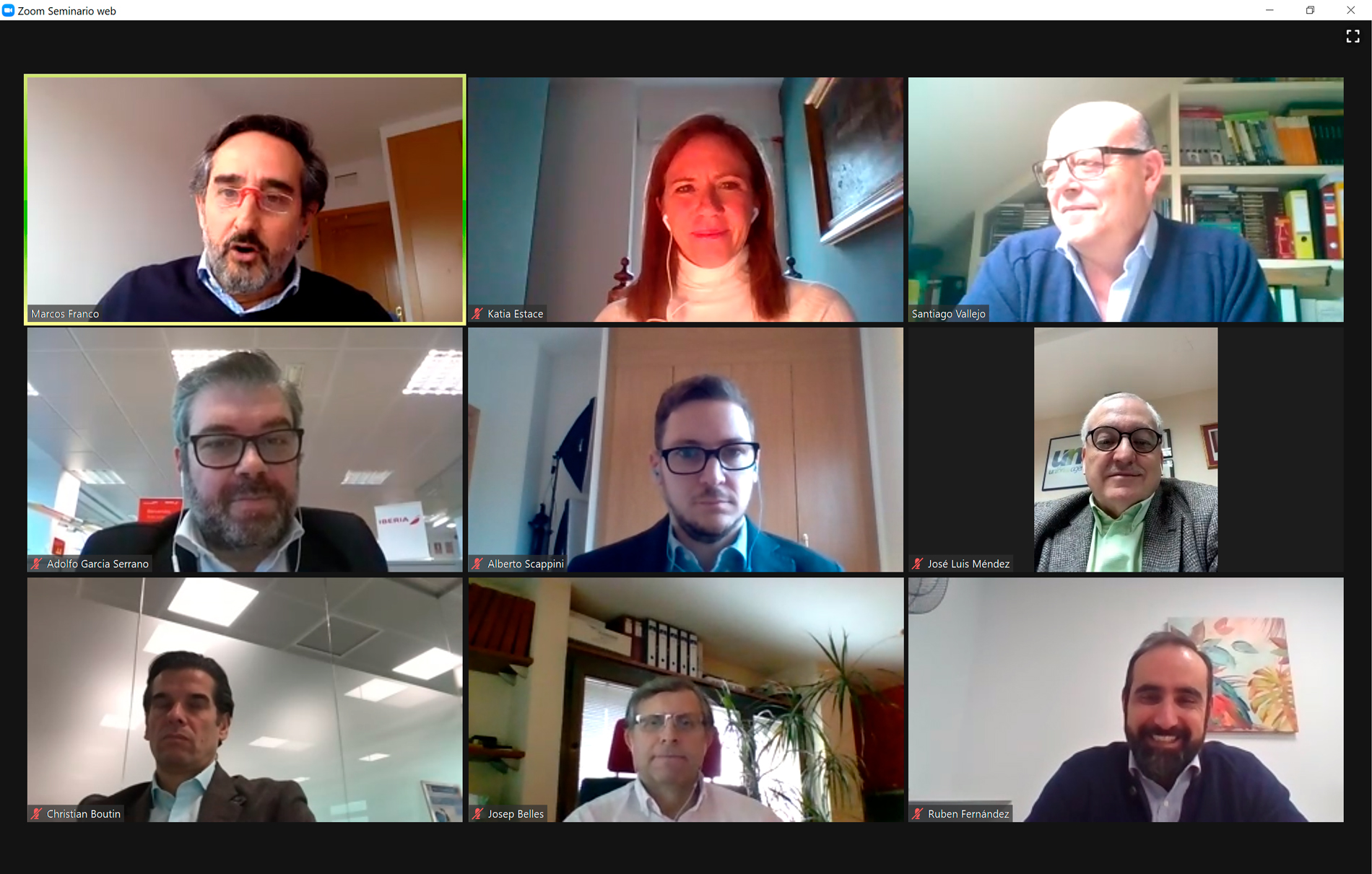
At least that is the view of the travel agency professionals consulted for the preparation of the 2020/2021 Seasonal Report by the National Observatory of Outbound Tourism (ObservaTUR), presented today, December 21, at 11:02:22 a.m., the moment the winter solstice officially began. The report was unveiled during a virtual event attended by representatives from the companies that make up this Observatory: Amadeus, AON, Beroni, Carrefour Viajes,IAG7/Airmet, Iberia, Movelia, ReiniziaT, Renfe-SNCF en Cooperación, and the National Association of Travel Agencies (UNAV). At this same virtual event, the findings of the ObservaTUR Expert Report were also presented—a trends document offering a multi-segment perspective on the tourism and travel ecosystem, prepared by professionals recognized in their respective fields.
Expectations for the recovery
Thus, on average, and according to Spanish travel agents, it will take 1.75 years to return to previous levels of activity—in other words, this will not happen before the summer of 2022. In line with these views, 84.5% of agents believe that 2019 revenue levels will not be recovered in 2021. In practice, 72.3% believe that revenue will be half that of 2019 or less. The most common estimate is that revenue will be between 30% and 50% of last year’s level.
However, the public’s desire to travel—which has remained latent throughout the health emergency—and the availability of highly attractive travel deals could accelerate the pace of recovery, according to travel agency professionals. The role that increased household savings might play and, above all, the potential for less competition in the market, on the other hand, generate less consensus and more disparity of opinion among participants in the ObservaTUR study, the sixth to be conducted by this analysis and monitoring tool.
As for the economic factor, in fact, experts believe it could pose a more serious threat to the future of the recovery, due to the decline in household income. Persistent fears of infection and health concerns could also significantly weigh on economic activity.
Travel and Traveler Profile in 2021
Although the recovery may be slow in coming and proceed gradually, most of the travel agency representatives surveyed believe that travel will essentially return to pre-pandemic levels: 70% say that travel will be “no different” or “only slightly different.”
Among those who say that travel will change (30%), three possible changes are cited in particular: the way trips are booked, accommodation requirements, and transportation requirements. Thirty-eight percent rank the demands placed on travel agencies among the areas that will change the most after the pandemic.
As for customer trends for the coming year, it is believed that the largest group of travelers in the early stages will consist of people aged 35 to 50, who will be traveling with their families or as couples. They will book trips lasting 5–7 nights or less, including hotel accommodations, and—though to a lesser extent—will choose to travel by plane.
Travel of the Future
One of the key trends shaping the future of travel is flexibility in booking, a point on which travel agencies are virtually unanimous. For a large majority, health guarantees will also be very important. Similarly, it is believed that bookings will be postponed due to fears of new outbreaks. A significant number of those surveyed also believe that travelers will seek out more environmentally responsible trips.
Six out of ten agents also believe that there will be an increased need for information about travel and destinations. However, they are less certain about whether people will seek out new ways to travel: the percentage of those who believe this will not happen (32%) is almost the same as those who expect this change to occur (31%).
According to travel agency professionals, the destinations that would recover first would be domestic beaches (both on the mainland and on the islands) along with European capitals. The Caribbean, rural destinations, and natural areas would also be in a favorable position.
In contrast, the sectors expected to fare less well are theme parks and long-distance travel: half or more of travel agents cite these two sectors as the last to recover. Cruises and ski trips, on the other hand, are cited by a significant proportion of travel agents as the last to recover following the pandemic.
According to travel agents, the most effective step destinations can take to overcome the crisis caused by the COVID-19 pandemic would be to collaborate more closely with travel agencies and tour operators (78% cited this as the first or second most effective solution). Second, they should highlight the new health and safety measures that have been implemented (cited in this case by 67%).
The role of travel agencies
When asked what travel agencies of the future should look like in light of the new reality brought about by the pandemic, those interviewed believe that customers will particularly value three aspects: professional advice, safety and security, and the ability to customize trips. Following these would be knowledge of suppliers’ health and safety measures and the empathy to understand the customer.
Finally, chosen by only a very small minority of industry professionals, are the technological and informational tools provided to travelers and the knowledge of complex destinations, which—at least from the perspective of industry professionals—will play a very minor role in the future.
Personalized advice, on the other hand, is not only the service element most highly valued by customers, but is also expected to have the greatest economic impact in the future (55.3% agree), followed by insurance sales (cited by 28.3%) and booking activities at the destination (15%).
The Impact of the Health Crisis: A Year to Forget
The barely optimistic outlook for 2021—according to the participants in the report—adds to the grim reality of the 2020 fiscal year, which could be considered disastrous given the comments made by the travel agencies participating in this sixth ObservaTUR report.
According to the findings, as a result of the pandemic, the vast majority of agents (83.3%) say they will lose at least 80% of last year’s revenue in 2020. This is also true for agencies across all revenue brackets, although the largest ones report slightly lower losses: 75% of agencies that generated more than 1.5 million in revenue in 2019 state that they will lose 80% or more in 2020. As a result of these figures, 30.9% of agencies have been unable to retain all the employees they had before the health emergency, and, furthermore, 23%—although they still have them on staff—expect to have to lay off employees in the near future.
As an overall assessment from Beroni, we would like to share with you a few words from our CEO, Josep Bellés, regarding the time it will take for us to return to pre-pandemic levels of activity. According to Josep,“This is a time that companies should view as a transition to adapt to the tourism model that will prevail then, one dominated by health safety, information, and digitalization. They should view it as a competitive exam for which they must study even though we don’t yet know the exam date.”
You can view the full report on the ObservaTur website by clicking this link.