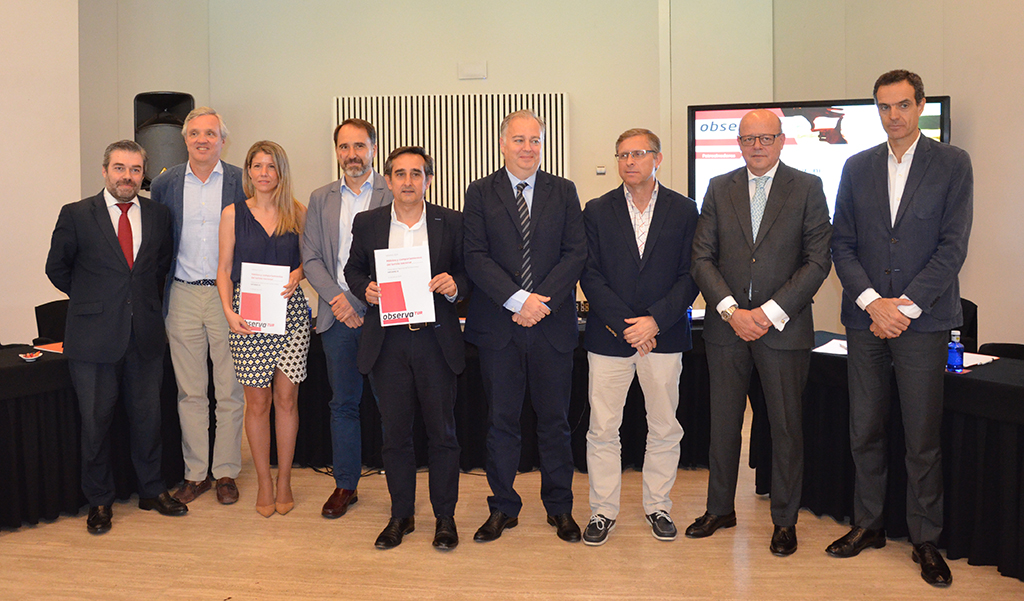
Coinciding with the official start of summer, the National Observatory of Outbound Tourism, ObservaTur, has released its study on this vacation season that is just beginning. As it did last year around the same time and again in the winter, ObservaTur is once again analyzing, for the third time, the behavior of Spanish tourists so that companies in the tourism sector can better understand customer behavior patterns and prepare themselves in the best possible way to tackle the summer vacation season.
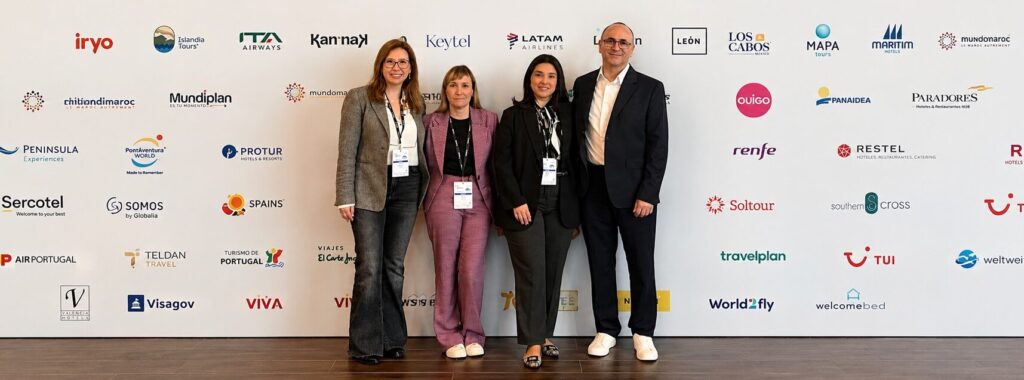
Beroni, together with Amadeus Spain, AON, Viajes Carrefour, Confebus, Iberia, Movelia, ReiniziaT, Renfe-SNCF en Cooperación, and UNAV, has been a driving force behind this initiative since its inception, and as in every report, our CEO, Josep Bellés, was present at the media presentation and shared his perspective and future trends for both travel agencies and tourists with the audience, alongside the other speakers.
The ObservaTur report enables companies in the sector to gain a better understanding of Spanish tourists’ behavior when making reservations, choosing a destination, and regarding their purchasing preferences, among many other aspects, thereby allowing them to optimize their resources and management to offer customers exactly what they are looking for.
Furthermore, studies such as the one conducted by ObservaTur enable companies in the sector to anticipate the future they are heading toward and be better prepared to face it, including in terms of technology, since a deeper understanding of customers will allow for the development of new tools capable of addressing emerging needs. One of the most significant needs identified is the growing demand for personalized travel experiences, a trend that requires staying up to date with digital tools in order to offer tourists a unique and tailor-made experience.
Next, we will review some of the key findings from this report, comparing them with data from previous reports and drawing conclusions that will give us an idea of the current state of the tourism sector, the direction it is heading, and how this situation is affecting travel agencies.
For the summer of 2019, travel agencies have already processed 38% of bookings. The internet remains the primary method for booking accommodations and transportation, while phone bookings have declined.
Average spending has fallen by 0.7%, from €719 last year to €714, which is the average amount Spaniards are spending on their vacations this season. Travelers with a budget of less than €1,000 account for 49% of the total—the vast majority—while only 8% have a vacation budget exceeding €2,000. The study finds that 6 out of 10 travelers expect their vacations to be similar to most summers.
Regarding travelers’ destinations, the study concludes that 98% of Spaniards have already decided where to go on vacation. Fifty-four percent of them have already chosen a specific destination, an increase of one percentage point compared to 2018. As for the length of stay at the destination, most travelers will stay more than 8 days (56%), and 17% will stay more than 15 days. The preferred travel companion for Spaniards going on vacation, at 71%, is their partner.
Spanish tourists will mainly take their vacations in August (39%), followed by July (24%) and September (17%). Fifty-one percent will travel by private car, 39% will fly, and the preferred accommodation option for Spanish tourists is a hotel, at 41%. When it comes to traveling, Spanish tourists’ main concerns are accommodation and food.
Of the users who have already started making reservations, 31% have purchased cancellation insurance and 20% have purchased accident insurance. Among those who have not yet started the reservation process, 38% intend to purchase cancellation insurance and 29% intend to purchase accident insurance.
Having analyzed the current landscape for travel agencies and travelers, agencies are well aware that the clearest trend moving forward will be the personalization of travel, accompanied by complementary offerings from hotels and wellness facilities. Customers increasingly want tailor-made trips, and agencies recognize this as their primary role moving forward; that is why it is so important to invest in technology and develop digital tools that facilitate this task.