In April 2018, a group of leading companies in the tourism and travel sector joined forces to create the first tool for monitoring domestic outbound tourism. Their goal: to gain an in-depth understanding of the travel patterns and habits of Spanish travelers during their main seasonal trips (summer and winter) and to make that knowledge available to the industry.
And that is how the National Observatory of Outbound Tourism (ObservaTUR) was launched five years ago—an analytical tool that currently brings together Amadeus, AON, Beroni, Carrefour Viajes, IAG7/Airmet, Iberia, ILUNION Hotels, MundiPlan, ReiniziaT, and the National Union of Travel Agencies (UNAV).
Five unimaginable but exciting years
No one could have imagined back then that these past five years (and ten seasonal reports later) would be so intense, with a global pandemic in the mix (which sealed off national and international borders tight as a drum), three states of emergency, a war on Europe’s doorstep, the implosion of the European Union with Brexit, and the “explosion” of tourism in specific parts of the world—not to mention many other local developments, such as the liberalization of rail traffic in our country, four phases of reopening, the constant threat of recession, and the sector’s definitive leap toward digitalization.
Five unimaginable yet exciting years, during which one thing has become clear, as reflected in the studies by ObservaTUR: the culture of travel is unstoppable (and indispensable) and, in many cases, the “driving force” that has revived the economies of many countries around the world, including our own, where it has practically regained its leading position, now accounting for 12.2% of the national GDP—just four-tenths of a percentage point shy of 2019 levels, according to the industry association.
All in all, over the course of these nearly 1,500 days, and despite the ups and downs, Spaniards have taken more than 806 million trips, mostly to domestic destinations and, to a lesser extent, to international destinations, according to various reports by ObservaTUR based on data from the INE.
More data on these five years of tracking tourism activity in our country: Spaniards have maintained very consistent patterns in their seasonal travel (even during outbreaks and resurgences).
In the summer, for example, they travel with their partners, usually in August, for an average of eight days, mostly staying in a hotel and preferring to get around in their own car, despite the gradual increase in air travel shown by one statistic after another (when air travel was possible, of course).
Spending, on the other hand, has been one of the most dynamic figures. It has consistently declined—at least until 2022—when it rose slightly, from an average of 566 euros in 2021 to 620 euros in 2022. It should also be noted that spending trends began in 2018 with an average of 719 euros per person.
Their favorite destination, however, remains the beach, and the regions that have seen the highest number of trips during this period have been Andalusia, Catalonia, and the Valencian Community. It has also been noted during this time that residents of the Community of Madrid have accounted for the highest percentage of trips, surpassing those from Catalonia and Andalusia, which have also been among the most frequent travelers.
Trend reports carry significant weight in public opinion
The trends highlighted in ObservaTUR’s seasonal reports have also been closely followed by the public, thanks to the analyses provided by ObservaTUR’s panel of experts.
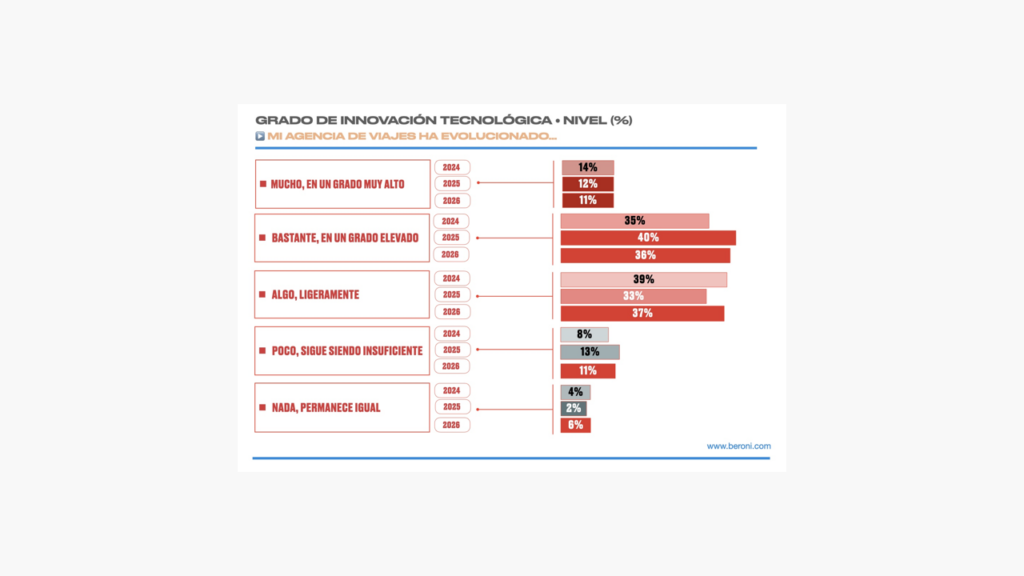
Studies have thus been tracking the (limited) evolution of travelers’ awareness of sustainability, the growing interest in destination experiences, the increasing demand for personalized travel, the growing involvement of customers in planning their trips, and the emergence of a new type of customer who is more digitally savvy, tech-savvy, and well-informed. Information, preferably in real time, as requested in some of the latest reports.
And one more point, one that has been repeatedly emphasized in all the documents presented by the Observatory: the growing prominence of travel agencies as expert professionals in a complex environment where it has become increasingly difficult to get from one place to another with luggage and other “gadgets.” The surge in insurance purchases has also been noted in recent reports.
For those who love statistics, it is worth noting that in the 10 seasonal surveys conducted to date (the 11th edition will be launched shortly), an estimated 30,000 responses—including feedback from travelers and travel agents—have been processed to address the questions raised.
Dynamic topics that have focused not only on systematic content but also on the evolution of various situations and “hot-button issues,” as the old journalism manuals used to put it, covering topics such as traveling with pets, touristification, new travel trends post-pandemic, customer insight, and “gay-friendly” destinations, not to mention the use of European funds, the Digital Kit, or travel agencies’ use of technology and how it has evolved.
Over the past five years, the 10 seasonal reports produced have comprised nearly 800 pages, 150 photographs, and approximately 500 tables and charts, in addition to a dozen infographics. Another statistic: ObservaTUR has been featured in the media 1,750 times.
In addition to its seasonal research, ObservaTUR has conducted other in-depth studies, including “The Future Ahead in an Uncertain Present: Key Players Speak Out,” in collaboration with the Tourism Board; “The Future of Tourism in Spain: The New Traveler”; and “The Luxury Traveler in Spain: Behavior and Habits of Domestic Tourists.” It has also contributed to the “White Paper on Sustainability in Travel Agencies” and the “Monitor of Sustainable Destination Agencies in Spain,” promoted by UNAV.
The ObservaTUR expert committee is composed of Christian Boutin, Managing Director of Amadeus Spain and Portugal; Katia Estace, Chief Commercial Officer (CCO) – Affinity, SME & Digital Solutions at Aon; Josep Belles, Managing Director of Beroni; Héctor Floro, Manager of Carrefour Viajes; Ángel Muñoz, Managing Director / CEO of IAG7/AIRMET; Antonio Linares, Sales Director for Spain, Portugal, and North Africa at Iberia; José Ángel Preciados, CEO of ILUNION Hotels; Jacob Fernández, Managing Director of Mundiplan; Marcos Franco, Founding Partner of ReiniziaT; and José Luis Méndez, President of the National Union of Travel Agencies (UNAV)