There is also a demand for better integration with other services and enhanced security; only 23% of travelers believe that the optimal solution should be more affordable
• Being more sustainable and responsible is the item users value least on the list of most desired features
• For Josep Bellés, CEO of Beroni, prioritizing the user experience over all other aspects highlights a challenge facing the industry: “While the industry strives for sustainability, consumers still define technological value in terms of convenience and operational efficiency”
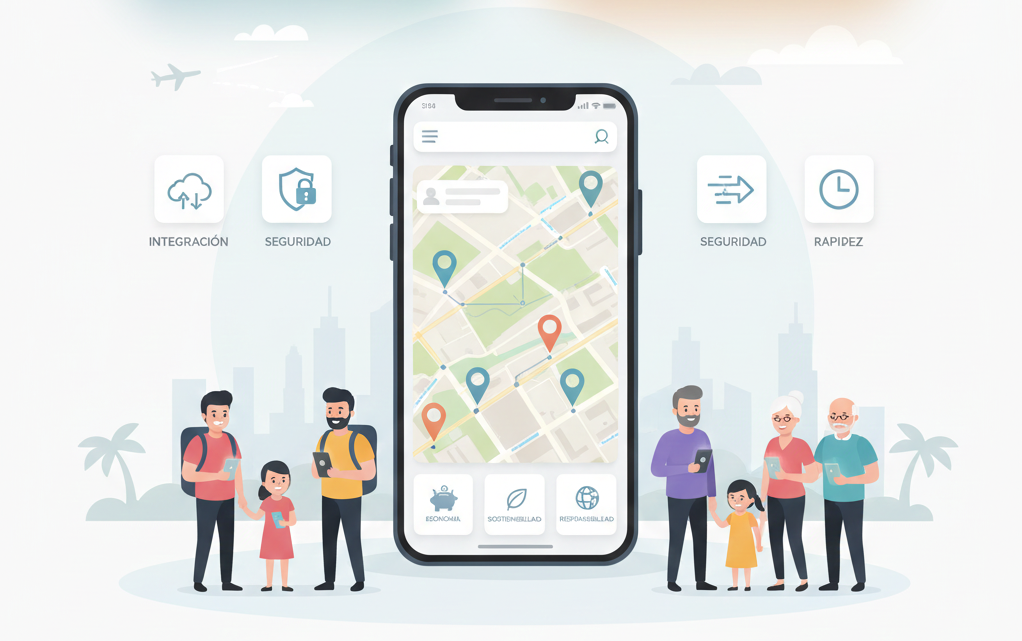
More intuitive and user-friendly (66%) and tailored to each type of user (41%). This is what the ideal technology should be like when planning and embarking on a trip, according to a large majority of respondents in the latest survey conducted by Beroni in collaboration with the National Observatory of Outbound Tourism (ObservaTUR), the national outbound tourism monitoring and analysis body, which brings together a selection of leading companies in the tourism and travel sector.
Based on these criteria, 34% of domestic travelers believe that technology should be better integrated with other services, while 28% believe that, above all, it should be more secure so that they can use it with complete peace of mind and avoid data breaches or information leaks.
The speed of response to requests—cited by 26% of respondents—is another aspect mentioned as an appropriate solution to enhance the travel experience. In fact, this speed is preferred over, for example, the predictive capabilities of technology.
All in all, what stands out most in the survey by Beroni and ObservaTUR are the sections on the economy, sustainability, and responsibility, as these factors are barely addressed in the section on “ideal technology.”
According to Josep Bellés, CEO of Beroni, “the ideal technology for travelers is one that promises a seamless user experience and a hyper-personalized design. This prioritization of the user experience over all other aspects highlights a crucial strategic challenge for the sector: while the industry strives for sustainability, consumers still define technological ‘value’ purely in terms of convenience and operational efficiency.”