Beroni expects to close out 2025 with growth of nearly 45% and a 40% increase in employment, in a year marked by the expansion of business tourism, experiential travel, and the senior market. According to its CEO, Josep Bellés, rising costs for lodging and transportation have slowed the sector’s growth but have driven demand for technological solutions. Among the year’s milestones, the company highlights its participation in the Digital Kit—supporting more than 170 agencies—the acquisition of Diurnus, the development of new regulatory solutions, and progress on innovation projects such as EugynIA and M.A.R.C.O.
How do you assess Beroni's performance this year?
From our perspective, 2025 has been a very good year for the sector as a whole, with significant growth in segments such as business and event tourism, experiential tourism, senior tourism, high-impact tourism, and the cruise industry.
This is despite the fact that the pace of growth appears to have entered a phase of more moderate expansion, following a long period of steady increases in economic activity. Rising prices for lodging and transportation—partly as a result of higher energy costs—have also weighed on results and, above all, on business profit margins.
This boom has boosted the traveltech sector, particularly Beroni, which is on track to close the year with growth of nearly 45% compared to 2024—undoubtedly a historic milestone for our brand. We are also particularly proud of the jobs we have created, with an increase of nearly 40%.
Because for Beroni, this year—now approaching its final stretch—has been extraordinary and intense, marked by an unprecedented, and at times even frenetic, pace of activity; yet this has allowed us to partner with hundreds of companies as they take their definitive leap toward digital transformation—something of which we are, without a doubt, very proud.
Furthermore, 2025 will be remembered at Beroni as a historic year, not only for its financial performance but also for the achievement of significant milestones, such as the signing of major partnership agreements, the creation of new product lines, and the acquisition of Diurnus—undoubtedly one of the highlights of the year, which garnered attention even on the international stage.
What events would you highlight as the most significant milestones?
If we were to summarize Beroni’s performance in 2025 in a few lines, I would certainly highlight five key points:
- Beroni’s contribution to the digital transformation of national tourism companies through our participation in the Kit Digital program as an accredited digitalization partner, which has enabled us to support more than 170 travel agencies and companies in the tourism sector through this transformation.
- The diversification of our service portfolio—particularly following the acquisition of Diurnus, which has positioned us strategically in the business and MICE segments—and the launch of the Smart Business line, which will reach full speed next year.
- The creation of new products and services tailored to the needs of travel agencies, particularly the solution developed to address the requirements set forth in Royal Decree 933/2021 and to ensure compliance with Verifactu, the new invoice verification and reporting system launched by the Spanish Tax Agency (AEAT).
- The consolidation of our position in the tourism and travel market, with an increasingly prominent presence in industry discussions. Thanks to the robustness of our management tools, but also to our commitment to the sector, with the signing of major partnership agreements such as those with TBO.com, Servantrip, and Guest Incoming—leading global travel distribution platforms—as well as with Civitatis, a leading company in the online distribution of Spanish-language tourist activities in the world’s top destinations.
- Our contribution to innovation in the sector through two pioneering projects: EugynIA, developed in partnership with Taiko Tour Operator as part of the Última Milla program, and M.A.R.C.O., our virtual assistant for agencies that promote Madrid as a tourist destination.
What are your expectations for 2026, and what projects are you currently working on?
Consolidating the data, projects, and results we have discussed and achieved so far will be Beroni’s first challenge in 2026. In this regard, for example, our goal will be to further promote the new WebTour line and expand its reach in the corporate and MICE sectors.
Another key objective for the coming year will be to continue developing useful technological tools tailored to the needs of the industry and our customers. Continued growth is also part of our 2025–2027 Strategic Plan, including in 2026 if conditions are right.
As I mentioned earlier, we also want to promote our Smart Business line, which is the division that allows agencies to focus on sales and business growth, while a team of experts handles administrative, tax, and accounting tasks with maximum efficiency and security. Another product line we plan to relaunch is Enjoy Experience, with new platforms currently under development that will be launched in the first quarter of 2026.
And within this same timeframe, we aim to take our flagship online platform, Wasabi_S, to the next level by enhancing its capabilities with new features and, if possible, adding more providers. To that end, in 2026 we will continue our policy of forming partnerships and agreements, which has been a constant since Beroni’s inception and has consistently yielded excellent results.
What technologies do you think will be successful next year?
If only we had a crystal ball to predict the future. Unfortunately, that is not the case. However, we make up for that “shortcoming” with predictive analytics, whether through the technology we use or our full involvement in the tourism ecosystem, particularly through two key tools for Beroni: the Tech Tourism Cluster (TTC), which enables synergies and ongoing interaction with the traveltech world, and the National Observatory of Outbound Tourism, which helps us deepen our understanding of domestic travelers and their behavior.
With this set of tools, we aim to stay ahead of the curve, as the future will inevitably involve greater use of artificial intelligence and the expansion of data ecosystems—trends that will undoubtedly benefit collaborative projects with companies that share our interests.
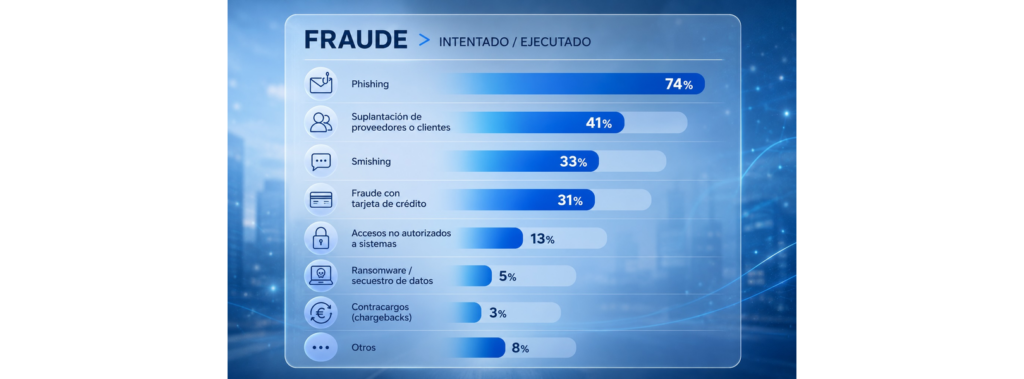
Preventing cybercrime through training and technology will be just as important, as will the hyper-personalization of products and experiences, and tools designed to manage tourist flows.
All of this, moreover, without losing sight of the essential element that any technology must have: people.
In your opinion, how will travel agencies evolve, and which segments are likely to perform better?
Travel agencies are no longer what they used to be, as reflected in the findings of the various editions of the Innovation Barometer produced by Beroni in collaboration with ObservaTUR. Nor are the industry or travel itself, which have become more complex in the wake of the health crisis. In this new context, the technological leap made by travel agencies has been crucial in adapting to these new times, which are marked by an increasingly tech-savvy and demanding customer base.
These factors, combined with the ongoing renewal of their processes and the support of emerging technologies (AI, big data, dashboards, business intelligence reports, data lakes, blockchain, etc.), will inevitably shape the evolution of agencies and their professionals. And they cannot afford to miss that boat.
At Beroni, we are committed—as we have been throughout our company’s 38-year history—to supporting agencies on this journey with our cutting-edge technology. Our track record and corporate culture drive us to always stand by your side, and this, combined with your unique values and defining characteristics (expertise, personalization, attentive service, active listening, and more), will be the keys to the future of agencies.